



For most adults, learning Tajweed to the point of applying the core rules takes about 5 to 6 months with three to five 30-minute lessons a week. Children usually need 6 to 12 months after finishing Noorani Qaida. Complete beginners who cannot read Arabic should add 3 to 6 months for the Qaida stage first. Polishing your recitation is an ongoing journey.
"How long will this take?" is the first question most students ask before learning Tajweed, and it deserves an honest answer. Many websites promise results in weeks. Real progress depends on where you start, how often you practice and whether someone is correcting you.
Below are realistic timelines for learning Tajweed at different ages and starting points, the factors that speed things up or slow them down, and a sample six-month plan you can follow.
Learning Tajweed Timelines at a Glance
| Starting point | Lessons per week | Typical time to apply core rules |
|---|---|---|
| Cannot read Arabic (adult) | 3–5 | 8–12 months, including Qaida |
| Reads Arabic slowly (adult) | 3–5 | 5–6 months |
| Reads fluently without rules (adult) | 3–5 | 3–5 months |
| Child who finished Qaida (ages 7–12) | 3–5 | 6–12 months |
| Native Arabic speaker | 3 | 2–4 months |
These are averages from typical one-to-one study. Your tutor will give you a personal estimate after hearing you recite.
Stage 1: Letters and Sounds (Weeks 1–6)
Every plan for learning Tajweed begins with the exit points of the letters. Adults who already read Arabic spend a few weeks correcting sounds that English has trained them to merge. Complete beginners spend longer here, usually inside a Noorani Qaida course, which already includes basic Tajweed. Our Quran Foundations course covers this stage.
Stage 2: Core Rules (Months 2–4)
This is where you learn the rules that appear on every page: Noon Sakinah and Tanween, Meem Sakinah, Ghunnah and Madd. Each rule takes about one to three weeks to understand and practice. Our guide to Tajweed rules for beginners explains each one with examples.
Stage 3: Refinement (Months 4–6)
Heavy and light letters, Qalqalah, the letter Ra and stopping rules come next, along with lots of practice in real recitation. By the end of this stage most students apply the rules naturally without stopping to think.
What Speeds Up Learning Tajweed
- Frequency. Five short lessons beat one long one. Rules need repetition.
- Daily practice. Ten minutes of home recitation can halve your timeline.
- One-to-one teaching. A tutor catches mistakes the moment they happen.
- Listening. Hearing a skilled reciter daily trains your ear.
- Applying rules in Salah. Using new rules in prayer makes them permanent.
What Slows It Down
- Long gaps between lessons, which force you to relearn.
- Theory without practice: knowing a rule is not the same as applying it.
- Old habits in adults who learned to read without Tajweed.
- Group classes where you recite only a few lines per session.
Learning Tajweed for Kids vs Adults
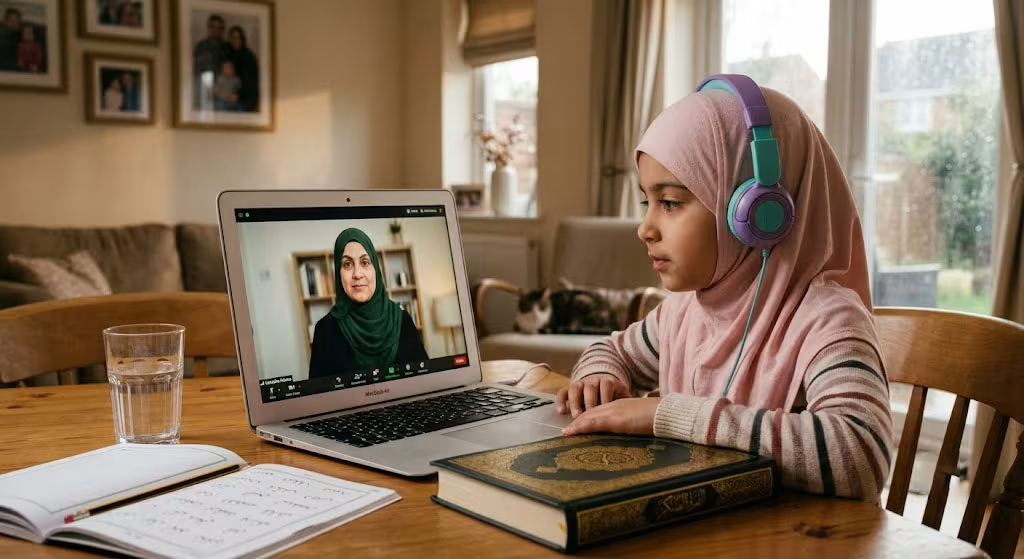
Children have excellent ears and copy sounds well, but their lessons are shorter and attention spans vary, so learning Tajweed usually takes them longer in calendar time. Adults understand rules faster but often need to unlearn habits. Both do best with a patient tutor and a clear routine. Parents can find more on our online Quran classes for kids page.
Teenagers sit between the two: they understand rules quickly like adults and still copy sounds well like children. Many teens finish the core stage of learning Tajweed in four to six months, especially when they recite the Surahs they use in Salah every day and record themselves once a week to hear their own progress.
A Sample 6-Month Plan
- Month 1: Makharij and letter qualities, short Surahs read slowly.
- Month 2: Noon Sakinah and Tanween, practiced in Juz Amma.
- Month 3: Meem Sakinah and Ghunnah.
- Month 4: All types of Madd.
- Month 5: Qalqalah, heavy and light letters, Ra and Lam.
- Month 6: Stopping rules and full revision through longer recitation.
If you prefer to study on your own schedule first, read our step-by-step guide on how to learn Tajweed online.
Signs You Are Making Real Progress
Progress in learning Tajweed is not always obvious from week to week. Look for these signs:
- Your teacher corrects you less often on letters you have studied.
- You notice Ghunnah and Madd in other people's recitation.
- You can recite a familiar Surah without stopping to think about rules.
- Recordings of yourself sound closer to the reciters you listen to.
- You feel more confident leading prayer at home.
How Teachers Measure Your Level
A good tutor tests you every month: you recite a set passage, and the teacher notes which rules you apply correctly and which still need work. These short tests turn learning Tajweed from a vague goal into a clear list of next steps, and they are the best way to know whether you are on track for your timeline.
Learning Tajweed Across the USA
Students in Virginia, Texas and every other state follow this same plan through live lessons scheduled in their own time zone. If you are ready for a guided path, our online Quran classes with Tajweed follow these stages with a dedicated tutor and monthly tests. You can also browse all our online Quran classes in USA.