


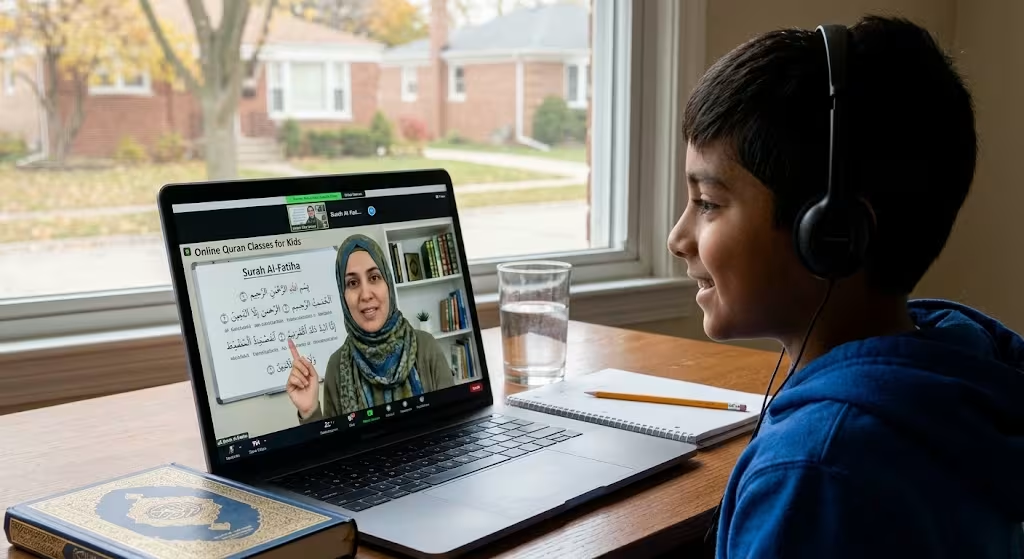
Are online Quran classes safe for kids? Yes, when the academy uses vetted teachers, private scheduled one-to-one lessons, no public chat or social media contact, and lets parents watch any lesson. At home, keep the device in a shared room, sit in on early lessons and choose a female teacher for girls and young children if you prefer.
Inviting a teacher into your home, even through a screen, is a big decision. Parents rightly ask whether online Quran classes are safe for kids, who the teacher really is and what happens when they are not in the room.
Online Quran classes are safe when the academy has clear rules and parents stay involved. Below is a practical checklist to decide whether an academy's lessons meet the standard your family needs. This checklist explains what a trustworthy academy should offer, how to set up lessons at home, and which warning signs mean you should look elsewhere.
What Makes Online Quran Classes Safe for Kids?
Most concerns come down to three questions: Who is the teacher? Who else can contact my child? Can I see what happens? Online Quran classes safe for children answer all three clearly. When an academy is vague about any of them, that is your cue to ask more.
Checklist Part 1: What the Academy Should Provide
- Vetted teachers. Ask how teachers are selected and whether they are tested on recitation, communication and conduct.
- Private, scheduled lessons. One teacher, one student, at a fixed time, with no open rooms that others can join.
- No direct private messaging. Lesson communication should go through parents, not social media or personal phone numbers.
- Parents welcome anytime. You should be able to sit in on any lesson without notice.
- Choice of teacher gender. Many families prefer a female Quran teacher for girls and young children.
- A way to raise concerns. A named contact who responds quickly and takes issues seriously.
- A registered business. A real company with an address and clear policies is more accountable than an anonymous profile.
Checklist Part 2: How to Set Up Lessons at Home
- Keep the laptop or tablet in a shared space such as the living room or kitchen table.
- Sit beside your child for the first few lessons and stay within earshot after that.
- Use headphones with the volume at a level you can still hear.
- Log in to the class link yourself for younger children.
- Turn off other apps and notifications during the lesson.
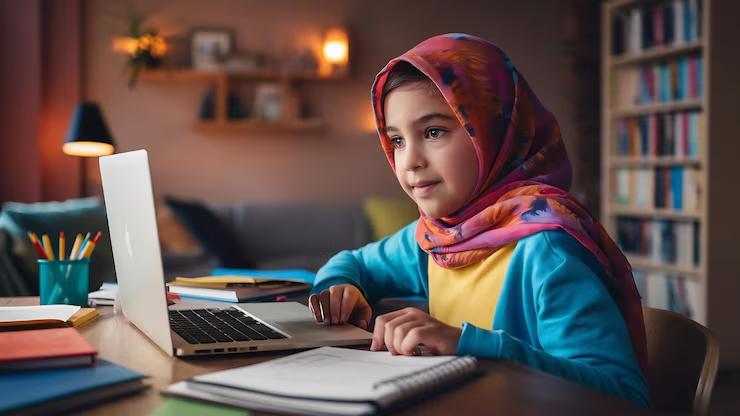
Checklist Part 3: Platform Settings
Whatever video platform is used, make sure meeting links are private, waiting rooms or passwords are on, and your child's account does not allow strangers to message them. These small settings keep online Quran classes safe from uninvited guests.
Red Flags: When to Walk Away
| Warning sign | Why it matters |
|---|---|
| Teacher asks for private social media contact | Communication should go through parents |
| No trial lesson allowed | You cannot judge the teacher first |
| Teachers change every week | No accountability or relationship |
| Parents discouraged from watching | Transparency should be welcomed |
| No business details or address | Hard to resolve problems |
Online vs In-Person: Which Is Safer?
Are online Quran classes safe compared with a tutor who visits your home or a class across town? In several ways, they can be safer. You can see and hear every online lesson from the next room, there is no travel or waiting alone after class, and lessons can be reviewed by the academy. With an in-person tutor at home or a class across town, parents often see far less of what happens.
Questions to Ask Before You Enroll
- How are teachers selected and checked?
- Can I sit in on every lesson?
- Will my child always have the same teacher?
- How do teachers communicate with parents?
- Can my daughter learn with a female teacher?
- Who do I contact if I have a concern?
An academy that keeps its online Quran classes safe will answer each of these clearly and without hesitation.
Device and Internet Basics
Use a device that stays in the family room, keep the operating system and video app updated, and avoid giving young children their own unsupervised accounts. A parent should own the login for every lesson. These basics take five minutes to set up and remove most online risks.
Talking to Your Child About Online Safety
Explain simply that their Quran teacher only talks to them during lessons, that they should tell you if anything ever feels uncomfortable, and that they will never be in trouble for telling you. Children who know the rules feel safer and more confident.
How Our Classes Keep Kids Safe
At Hassaan Online Academy LLC, every lesson is private and scheduled, parents can join any class, communication goes through parents and girls can learn with a female tutor. Our Quality Assurance Team reviews lessons, and a dedicated complaint officer handles any concern. This is how we keep our online Quran classes safe for every child we teach. So, are online Quran classes safe? For families who follow this checklist and choose an accountable academy, the answer is yes.
Safe Online Learning Across the USA
Families from Virginia to California choose online lessons because they can see exactly what happens in every class, something that is harder with a group class across town. Explore our online Quran classes for kids, read our tips on how to teach Quran to kids at home, or browse all our online Quran classes in USA.