


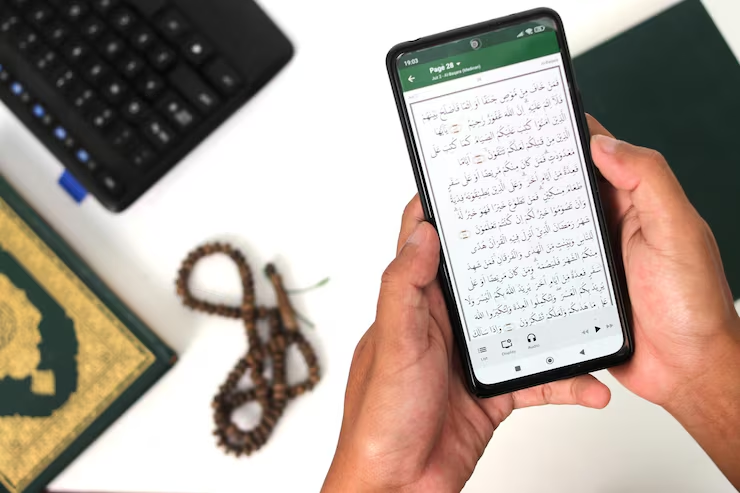
You can study tafseer without knowing Arabic. Start with one clear English translation, then add one trusted beginner-level tafsir such as Tafsir As-Sa'di or the abridged Tafsir Ibn Kathir. Begin with Al-Fatiha and the short Surahs of Juz Amma, read 5 to 10 verses a session, write one lesson per passage, learn the most repeated Quranic words as you go, and check your questions with a qualified teacher.
Many Muslims in America can read the Quran in Arabic, or at least recite the short Surahs in Salah, yet feel they do not really understand what they are saying. Others open a big tafsir book once, feel lost in the footnotes and close it again. If that sounds like you, the problem is not your ability. It is usually the lack of a simple starting path.
This guide shows you how to study tafseer as a complete beginner, even if you do not know Arabic. You will learn what tafseer is, which books to start with, how a single study session works, a realistic 12-week plan, and the common mistakes that slow beginners down.
What Is Tafseer, and Why Study It?
Tafseer (also spelled tafsir) is the explanation of the Quran: what a verse means, why it was revealed, how it connects to the verses around it, and how the Prophet ﷺ and his Companions understood and lived it. A translation tells you what the words say. Tafseer tells you what they mean and what to do with them.
Allah describes the Quran as "a blessed Book which We have revealed to you, so that they may reflect upon its verses" (Surah Sad, 38:29). He also asks, "Do they not reflect upon the Quran, or are there locks upon their hearts?" (Surah Muhammad, 47:24). Reflection needs understanding, and understanding is exactly what you build when you study tafseer. The good news is in Surah Al-Qamar (54:17): Allah has made the Quran easy to remember and take lessons from.
How the scholars explain the Quran
Classical scholars follow a clear order of sources when they explain a verse. Knowing it helps you judge any explanation you read:
| Source | What it means | Example of use |
|---|---|---|
| The Quran itself | One verse explains another | Surah An-Nisa (4:69) explains "those You have blessed" in Al-Fatiha |
| The Sunnah | The Prophet's ﷺ words and actions | Hadith that explain prayer, fasting or a specific verse |
| The Companions | How the Sahabah understood a verse | Reports from Ibn Abbas and Ibn Mas'ud |
| The next generation | Students of the Companions | Explanations from Mujahid and Qatadah |
| The Arabic language | Word meanings and grammar | Why "Iyyaka" comes before the verb in Al-Fatiha |
When you study tafseer from a reliable book, all of this work has already been done for you. Your job as a beginner is to read it carefully, not to reinvent it.
Can You Study Tafseer Without Arabic?
Yes. Millions of English-speaking Muslims study tafseer through translated works and English-speaking teachers. You will not reach the level of a scholar this way, and you do not need to. Your goal is to understand what you recite, connect it to your life and grow in faith.
Arabic still helps, so pick it up a little at a time. A relatively small set of words, such as Rabb (Lord), ilah (god), kitab (book), qalb (heart), sabr (patience), 'ilm (knowledge) and amanu (they believed), appears again and again across the Quran. Learning a few of these words each week means the Arabic you recite slowly starts to make sense on its own. Our Quran translation course teaches this word-by-word meaning alongside the text.
What You Need Before You Start
1. One clear English translation
Choose one and stay with it for your first year. Sahih International and The Clear Quran by Dr. Mustafa Khattab are both popular in the USA, easy to read and widely trusted. M.A.S. Abdel Haleem's translation reads very smoothly too. Switching between translations every week only confuses a beginner.
2. One beginner-level tafsir
| Tafsir | Why beginners like it | Good for |
|---|---|---|
| Tafsir As-Sa'di (in English) | Short, direct explanations focused on lessons | Daily reading of 5 to 10 verses |
| Tafsir Ibn Kathir (abridged) | Classical, rich in hadith and reports of the Companions | Deeper reading once a week |
| Ma'ariful Qur'an (in English) | Explains the background and the rulings in a clear way | Readers who want more detail |
Pick one as your main book. Many beginners start with As-Sa'di because each explanation is short enough to finish in one sitting. Free websites and Quran apps also include English tafsir. They are helpful for quick reading, as we discuss in online Quran classes vs Quran apps, but an app cannot answer your questions.
3. A notebook and a fixed time
A simple notebook (paper or digital) and a fixed 20 to 30 minute slot are enough. After Fajr, during a lunch break or after the kids are in bed all work. Consistency matters more than length.
How to Study Tafseer in One Session: 5 Steps
Here is a simple routine you can repeat every time you study tafseer:
- Recite the passage. Read 5 to 10 verses in Arabic, slowly. If your reading is weak, listen to a recording first.
- Read the translation. Read the same verses in English, all together, so you see the flow of the passage.
- Read the tafsir. Read the explanation of each verse in your chosen tafsir. Mark any word or idea you did not understand.
- Write three lines. In your notebook, write the main meaning, one lesson, and one action for this week.
- Ask and act. Note your questions for a teacher, then try your action before the next session.
A worked example: Surah Al-Asr
Surah Al-Asr (103) has only three verses, which makes it a perfect first lesson. Allah swears by time, says that humanity is in loss, and then names the four qualities that save a person: faith, righteous deeds, advising one another to the truth, and advising one another to patience. Imam Ash-Shafi'i is reported to have said that if people reflected on this Surah alone, it would be enough for them.
Your notebook might read: *Meaning: time is passing and everyone loses except people with four qualities. Lesson: faith alone is not the full picture; good deeds and helping others stay on truth matter too. Action: this week, encourage one family member in something good, kindly.* That is how a beginner should study tafseer: short, clear and practical.
A 12-Week Plan to Study Tafseer of Juz Amma
Juz Amma, the 30th part of the Quran, is the best place to begin. Its Surahs are short, you already recite many of them in Salah, and every lesson pays off in your prayer right away. Work backward from the shortest Surahs:
| Week | Surahs | Focus |
|---|---|---|
| 1 | Al-Fatiha, 112 to 114 | Tawheed and seeking protection |
| 2 | 108 to 111 | Gratitude and loyalty to the truth |
| 3 | 103 to 107 | Time, wealth and caring for others |
| 4 | 99 to 102 | The Day of Judgment |
| 5 | 95 to 98 | Human dignity and revelation |
| 6 | 91 to 94 | The soul, comfort and hope |
| 7 | 87 to 90 | Purifying yourself, the path of good |
| 8 | 84 to 86 | Records of deeds and protection |
| 9 | 81 to 83 | Signs of the Last Day and honesty |
| 10 | 79 to 80 | Prophetic manners and accountability |
| 11 | 78 | The great news of resurrection |
| 12 | Review | Reread your notes and teach one Surah to someone |
Three sessions a week of 20 to 30 minutes is enough for this plan. For a one-line lesson on every Surah in the table, keep our Juz Amma tafseer summary of all 37 Surahs open beside you. If you are memorizing at the same time, pair it with our guide on how to memorize Juz Amma, so you understand each Surah as you learn it by heart. Already know the meaning of Al-Fatiha? Our Surah Al-Fatiha tafseer in English is a good first reading for week 1. When you are ready for a single verse that sums up belief in Allah, try our Ayat al-Kursi meaning and explanation.

Common Mistakes When Beginners Study Tafseer
- Explaining verses by personal opinion. The Quran warns, "Do not pursue that of which you have no knowledge" (Surah Al-Isra, 17:36). Read what the scholars said before forming your own view.
- Reading a verse out of context. A single verse quoted alone can sound very different from the full passage. Always read the verses before and after.
- Starting with the hardest book. Opening a ten-volume tafsir on day one usually ends in frustration. Build up from short explanations.
- Collecting information without action. The goal is a changed heart and better deeds, not a full notebook.
- Studying with no one to ask. Self-study is a great start, but questions about rulings, unclear verses and differences of opinion need a qualified teacher.
Self-Study vs Studying With a Teacher
Reading on your own builds the habit, and a teacher keeps it accurate. In a one-to-one lesson you can ask why a verse was revealed, what a hard word means or how two explanations fit together, and get an answer in minutes instead of searching for hours. A teacher also corrects your recitation while you study tafseer, which matters because some pronunciation mistakes change the meaning.
That is why many adults choose online Quran tafseer classes: a short weekly lesson with a teacher, plus your own reading between classes. Families in Texas, Illinois and New York often book evening or weekend sessions that fit US school and work schedules. You can see the full study path in our Tafsir course outline. If you are returning to the Quran after many years, our guide for adult beginners explains where to start with reading first.
Start Your Tafseer Journey This Week
You do not need to wait until your Arabic is perfect. Pick one translation, one beginner tafsir and three short sessions a week, and begin with the Surahs you already recite. Within three months you will understand much of what you say in Salah, and that changes how every prayer feels. When you are ready for guidance, compare our online Quran classes in USA and book a free trial.