


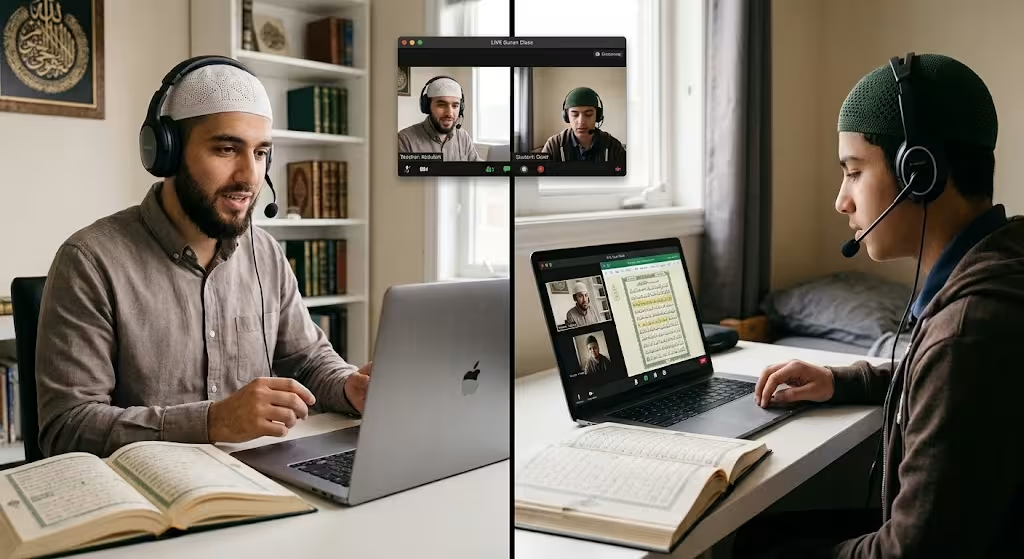
In a free trial Quran class, ask questions that test three things: the teacher, the plan and the practical fit. Ask about the teacher's qualifications and experience with students like you, how they will correct mistakes, what your first month will cover, how progress is reported, and how scheduling, cancellations and billing work in your US time zone. Then watch the lesson itself: how much you recite, how errors are corrected and how you feel at the end.
Almost every online academy offers a free trial now, so the trial itself proves nothing. What matters is what you do with those 30 minutes. Most families log in, let the teacher run the session, say "that was nice" and sign up. A few weeks later they find out the teacher changes every month, the slot clashes with soccer practice, or nobody explains what their child is actually learning.
A free trial Quran class is your one chance to interview the teacher and the academy before you pay. This guide gives you 12 questions grouped into before, during and after the trial, shows what a strong answer sounds like next to a weak one, and ends with a short checklist you can keep open on your phone during the call.
What Happens in a Free Trial Quran Class?
Most trials follow the same simple shape, whether you are a parent booking for a child or an adult starting again:
- Welcome (3 to 5 minutes). The teacher introduces themselves, checks your audio and video and asks about your goal.
- Level check (10 minutes). The student reads a few letters, a line of Noorani Qaida or a short surah so the teacher can hear the starting point.
- Mini lesson (10 to 15 minutes). The teacher teaches one small new thing and corrects it live. This is the most important part to watch.
- Plan and questions (5 minutes). The teacher suggests a level, a weekly schedule and a first goal, and you ask your questions.
At our academy the trial is free for 5 days, with no payment needed to book. That gives you several lessons, not one, which makes your judgment far more reliable. If you are still comparing providers for online Quran classes in USA, use the same 12 questions with every academy so you compare like with like.
Before the Trial: 4 Questions to Ask the Academy
Ask these on WhatsApp, email or the phone call when you book. The answers save you from wasting a lesson on a poor fit.
1. Will the trial teacher be my regular teacher?
Some academies use a star teacher for trials and then hand you to someone else. You want the person you meet to be the person you keep. A good answer: "Yes, unless you ask for a change."
2. Do you have male and female teachers, and can I choose?
Many US families want a female teacher for daughters, mothers or ladies' classes. Ask before the trial, not after. If this matters to you, our guide to finding a female Quran teacher online explains what to look for.
3. What times are open in my time zone?
Give your real windows, such as 5:00 to 7:00 PM Central on weekdays or Saturday mornings Pacific. An academy that says "anytime" without naming slots may not have teachers free at the hours you need. Our guide to online Quran classes across US time zones shows which slots fill fastest after school.
4. What happens after the free trial Quran class ends?
Ask plainly: "Do I need a card to book? Will I be charged automatically?" A trustworthy academy tells you the monthly fee, the payment methods and how to cancel before you start. Our online Quran classes fee plans page lists every plan openly for this reason.
During the Trial: 5 Questions to Ask the Teacher
These questions are for the last five minutes of the free trial Quran class. Ask them politely; a good teacher enjoys them.
5. What qualifications do you have, and who have you taught?
Ask whether the teacher holds an Ijazah or a formal Tajweed certificate, and, more importantly, whether they have taught students like you: a shy 6-year-old, a teen preparing for Hifz, or an adult revert starting from the alphabet.
6. What level am I at, and why?
A good teacher names a specific level ("Lesson 7 of Noorani Qaida, joining letters") and gives one example of a mistake they heard. A vague "good, good" means they were not listening closely.
7. How do you correct mistakes?
Watch for this during the mini lesson too. The best teachers stop at the error, model the correct sound, let the student try again and praise the fix. Constant interruptions or silent acceptance of errors are both warning signs.
8. What will we cover in the first month?
Ask for a concrete target: "finish the first six Qaida lessons" or "correct the makharij of the throat letters and complete Surah An-Nas to Surah Al-Kawthar." Clear goals make progress visible.
9. How will you report progress?
Parents in particular should ask how often they receive updates, whether there are monthly tests and how to reach the teacher between lessons.
After the Trial: 3 Questions to Ask Yourself
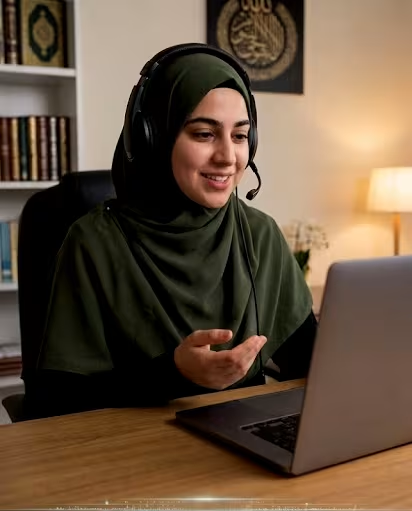
The last three questions are for you, once the camera is off and the free trial Quran class is over.
10. How much did the student actually recite?
Quran reading is learned by the tongue, not by watching. In a good one-to-one trial, the student recites for most of the lesson. If the teacher talked for 20 minutes and the student read for 5, the format will not change after you pay. Our comparison of one-on-one and group Quran classes explains why this matters so much.
11. Did the student feel safe and comfortable?
For children, ask them directly: "Do you want to see this teacher again?" For yourself, notice whether you felt embarrassed or relaxed. Parents can read our checklist on whether online Quran classes are safe for kids for privacy and supervision tips.
12. Can I keep this schedule for a full school year?
A class that only works in summer break will not survive the first busy week of school. Picture an ordinary Tuesday in February before you commit.
Good Answers vs Weak Answers
Use this table during or right after your free trial Quran class. If most answers land in the right-hand column, keep looking.
| Question | Strong answer | Weak answer |
|---|---|---|
| Same teacher after trial? | Yes, you keep this teacher | We will assign someone later |
| Qualifications | Names the Ijazah or certificate and years teaching | "Very experienced," nothing specific |
| Your level | Names a level and one exact mistake | "Good, you are doing great" |
| Correction style | Stops, models, lets you repeat | Talks over you or lets errors pass |
| First-month goal | A measurable target | "We will see how it goes" |
| Progress reports | Monthly test and parent updates | Only if you ask |
| Billing | Clear monthly fee, easy cancel | Pressure to pay today |
Free Trial Quran Class Checklist for US Families
Prepare the night before so the trial shows the real teacher, not a struggle with tech.
- Device: a laptop or tablet is better than a phone, so the student can see the page clearly.
- Audio: wired earbuds or a headset with a mic; the teacher must hear every letter.
- Quiet room: turn off the TV and silence other devices for 30 minutes.
- Mushaf or Qaida: have a printed copy ready, or ask the teacher which file to open.
- Time zone: confirm the lesson time in writing, especially in the weeks around daylight saving changes.
- Parent nearby: for children under 10, sit in the room for the trial.
- Your list: keep the 12 questions open on your phone.
Trial Differences for Kids, Adults and Ladies
Not every free trial Quran class should look the same. Judge it by the student in front of the camera.
| Student | What a good trial includes | Extra question to ask |
|---|---|---|
| Young child (4 to 7) | Short, playful segments, lots of praise, a parent in the room | How do you keep a young child focused for 30 minutes? |
| Older child or teen | Honest level check, a clear Qaida or Tajweed path | How do you balance Quran with homework and school activities? |
| Adult beginner | Patient alphabet work, no rushing, no judgment | Can we start from zero without embarrassment? |
| Lady or mother | Female teacher, flexible daytime slots | Can the lesson move if a child needs me? |
| Hifz student | Recitation test, revision plan | How do you balance new lessons and revision? |
For a deeper look at judging a tutor for a young learner, see how to choose a Quran teacher for your child. Complete beginners usually start with our Noorani Qaida foundations course.
Red Flags in a Free Trial Quran Class
- The teacher's camera stays off without a good reason.
- The lesson starts late and nobody apologizes.
- You are pushed to pay before the trial ends.
- No one can tell you the monthly cost in writing.
- The student barely recites.
- The teacher cannot explain the plan for next month.
One red flag can be a bad day. Two or more usually describe the service you will get once the free trial Quran class ends.
Families Across the US Use the Same Questions
Parents in Texas often ask about after-school slots around long commutes, while families in Illinois and the Chicago area ask about early weekend mornings in Central Time. The questions stay the same; only the schedule changes. When you are ready, book a free trial Quran class and bring this list with you.
The Prophet (peace be upon him) said, "The best among you are those who learn the Quran and teach it" (Sahih al-Bukhari). A well-chosen teacher is the first step toward that blessing for your family.