


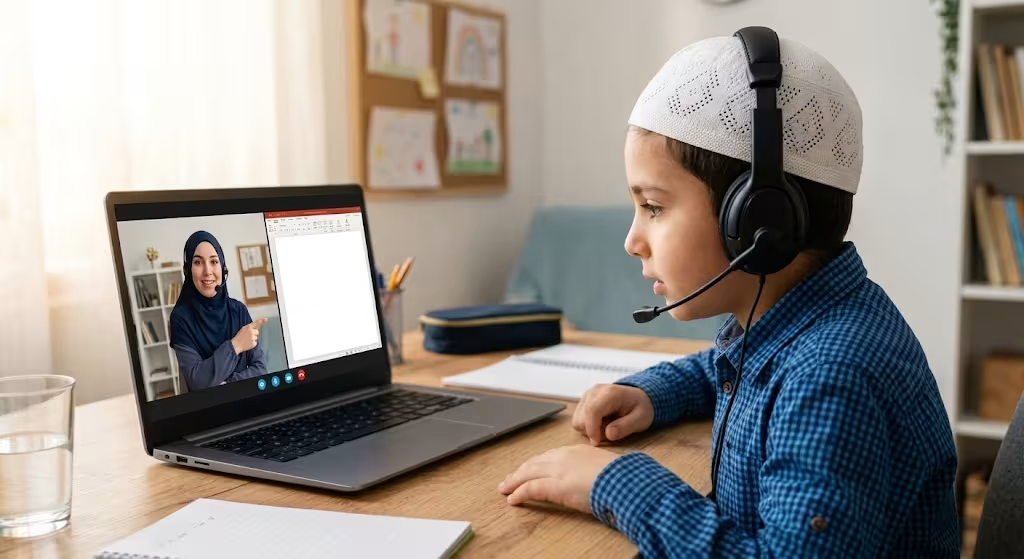
Quran classes in Chicago come in four main forms: weekend Islamic schools at masjids, evening Hifz programs, full-time Islamic schools, and live one-to-one online lessons. Weekend schools run on Saturday or Sunday from fall to spring and usually cost $50 to $100 a month. Online lessons start at $40 a month, run 30 minutes on weekdays in Central Time, and save families the drive across the city or the suburbs.
The Chicago area is home to one of the largest and most established Muslim communities in the United States. Devon Avenue on the North Side, the southwest suburbs around Bridgeview and Orland Park, the western suburbs from Villa Park to Naperville, and the northwest suburbs around Rolling Meadows and Hanover Park all have active masjids, and most of them teach children the Quran in some form.
So the challenge for most families is not finding Quran classes in Chicago. It is finding one that fits a CPS or suburban school day, a 40-minute drive on the Eisenhower, a December sunset before 4:30 pm, and a child who learns at their own pace. This guide compares the real options, what they cost, how they fit the 2026-27 school calendar, and gives you a simple plan to choose.
What Quran Classes in Chicago Look Like Today
Most programs across the city and the suburbs fall into five groups:
- Weekend Islamic schools. Saturday or Sunday mornings, usually from September to May or June. Quran is one subject next to Islamic studies, Arabic and Seerah, often in classes of 15 to 25 children.
- Evening Hifz programs. Several weekday evenings at a masjid or academy, for children who already read fluently.
- Full-time Islamic schools. Day schools in the city and suburbs that teach Quran daily alongside the regular curriculum, with private-school tuition.
- Private home tutors. A local teacher who visits your home or meets at the masjid, usually by the hour.
- Live one-to-one online lessons. One teacher and one student on a video call, at a time you choose.
Each one fits a different stage. A five-year-old who has never seen Arabic letters needs short, patient lessons; a twelve-year-old ready to memorize needs daily review. If you want a teacher on Central Time who builds a plan around your child, our online Quran classes in Illinois are designed for exactly that.
City or Suburbs: How Location Changes Your Options
Where you live in Chicagoland shapes which Quran classes in Chicago are realistic for your family.
The North Side and the northern suburbs (Rogers Park, West Ridge, Skokie, Morton Grove, Niles) have masjids within a short drive, but weekend classes fill up early and parking on a Sunday morning can be hard.
The southwest suburbs (Bridgeview, Oak Lawn, Orland Park, Tinley Park) have some of the oldest and largest Islamic institutions in the region, including full-time schools. Families farther out often drive 25 to 40 minutes each way.
The western and northwest suburbs (Villa Park, Lombard, Naperville, Aurora, Schaumburg, Hanover Park, Rolling Meadows) have strong weekend schools and growing Hifz programs, but distances between towns are long and winter roads add time.
Downtown and the Loop have fewer children's programs, so families in the city center often combine a weekend masjid class with online lessons. Our online Quran classes in Chicago page lists the Central Time slots most city families pick.
What It Really Costs: A Chicago Comparison
Tuition is only part of the cost. Driving time, gas and tolls matter too. Here is a realistic look at the main types of Quran classes in Chicago:
| Option | Typical fee | Time per week incl. travel | Child reads aloud per week |
|---|---|---|---|
| Weekend Islamic school | $50 to $100 per month | 4 to 5 hours | 5 to 15 minutes |
| Evening Hifz program | $100 to $200 per month | 8 to 12 hours | 30 to 60 minutes |
| Private home tutor | $25 to $50 per hour | 1 to 3 hours | 45 to 90 minutes |
| Live one-to-one online, 3 days | From $40 per month | 1.5 hours | 60 to 75 minutes |
Fees differ between centers and change every year, so treat these as ranges and ask each program for its current price. The pattern is the same everywhere: in a group, most of the time goes to waiting your turn, while in a one-to-one lesson most of the time goes to reading. Our guide to online Quran classes cost in the USA breaks down plans, sibling discounts and what affects price, and one-on-one vs group Quran classes explains the trade-off in detail.
Fitting Quran Classes in Chicago Into the 2026-27 School Year
Chicago runs on Central Time, and that matters more than most parents expect. In December the sun sets in Chicago around 4:20 pm, so Maghrib, dinner, homework and any evening class compete for the same two hours. Plan lessons for the 4:00 to 6:00 pm window on school days, or move older children to after Maghrib.
The Chicago Public Schools calendar for 2026-27 gives you a few natural checkpoints:
- Winter break: Monday, December 21, 2026 to Friday, January 1, 2027. Two weeks off is perfect for a daily 20-minute "catch-up" lesson or finishing a Surah.
- Ramadan 2027: expected to begin around February 8, 2027, depending on the moon sighting. Lighter school-night lessons and extra weekend recitation work well.
- Eid al-Fitr: expected around March 9 or 10, 2027. Illinois law requires public schools to excuse students for religious holidays, so let your school know in advance and ask your Quran teacher to pause that week's classes.
- Spring break: Monday, March 22 to Friday, March 26, 2027, a good week to review everything learned since September.
- Summer: CPS finishes in June, which leaves about ten weeks to complete Noorani Qaida or memorize several Surahs of Juz Amma.
Suburban districts in DuPage, Cook and Will counties set their own calendars, so check your district's dates. If grandparents or cousins live in other states, our guide to online Quran classes across US time zones shows how one family schedule can work from Eastern to Pacific Time.
Sample Weekly Schedules on Central Time
These schedules work well for online Quran classes in Chicago. Adjust them to your child's energy and activities.
| Grade | Best lesson time (CT) | Lessons per week | Length |
|---|---|---|---|
| Pre-K and Kindergarten | 3:30 to 5:00 pm, or Saturday morning | 3 | 20 to 30 minutes |
| Grades 1 to 5 | 4:00 to 5:30 pm, after a snack | 3 to 4 | 30 minutes |
| Grades 6 to 8 | After Maghrib, around 5:30 to 7:00 pm in winter | 3 to 5 | 30 to 45 minutes |
| High school | 6:30 am before school, or 8:00 pm | 3 to 5 | 45 minutes |
| Working parents | 6:00 am before the commute, or 9:00 pm | 2 to 3 | 30 minutes |
Keep the same days and times every week, and add 10 minutes of revision with a parent on non-lesson days. Not sure how many lessons your child needs? Read how many Quran classes per week kids need.
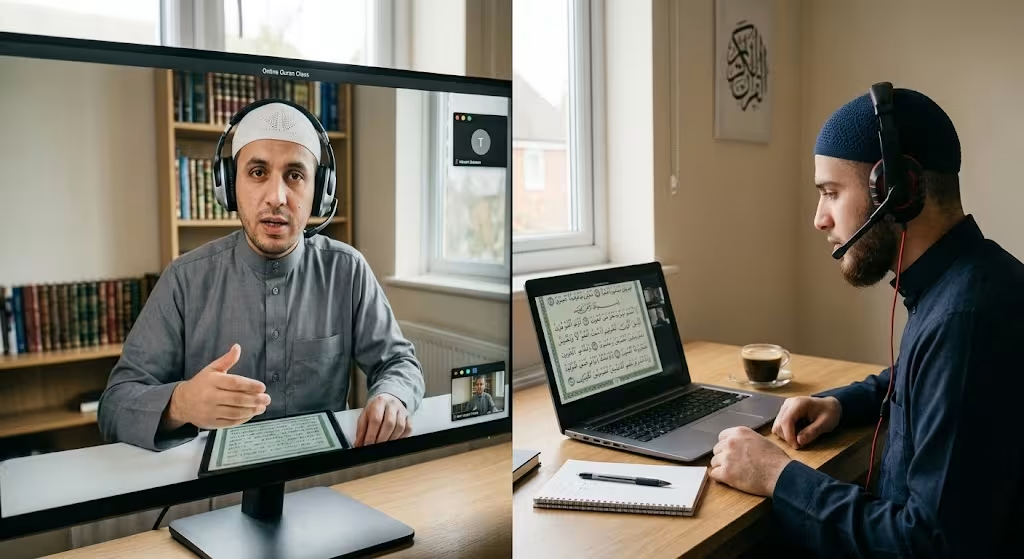
A 6-Step Plan to Choose Quran Classes in Chicago
- Check your child's level. Can they name the Arabic letters? Read joined words? Read a full page slowly? The answer tells you whether they need Qaida, reading practice, Tajweed or memorization.
- Set one goal for the school year. For example, "finish Noorani Qaida by June" or "memorize the last 10 Surahs of Juz Amma." A clear goal makes progress easy to see.
- Measure the real commute. Time the drive to each of the Quran classes in Chicago on your list on a Sunday morning and a weekday evening, including winter weather. Twenty minutes in October can be forty in January.
- Count reading minutes, not class hours. Ask each program how long your child will read aloud to the teacher every week. Aim for at least 60 minutes.
- Book trial lessons. Visit one weekend class and try one online lesson. Watch whether your child speaks up, smiles and wants to go back. Our list of questions to ask in a free trial Quran class helps you judge the teacher quickly.
- Review after eight weeks. Ask for a short progress note. If your child has not moved forward, change the time, the plan or the teacher.
What Chicago Kids Learn, Age by Age
Good Quran classes in Chicago follow the same path, whether they meet in Bridgeview, Naperville or on a laptop at home:
| Age | Main focus | Realistic goal for one school year |
|---|---|---|
| 4 to 6 | Arabic letters, Noorani Qaida, short duas | Recognize and sound out all letters |
| 7 to 9 | Joined reading, basic Tajweed, short Surahs | Read the Quran slowly with few mistakes |
| 10 to 12 | Tajweed rules, fluent reading, memorization | Memorize 10 to 20 Surahs of Juz Amma |
| 13 and up | Hifz or meaning and Tafseer basics | A steady Hifz plan or fluent, correct recitation |
Young beginners start with our Quran Foundations course, which covers letters, vowel marks and Qaida lessons before full Quran reading. Older children who are ready to memorize can compare formats in our guide to part-time vs full-time Hifz programs.
Quran Classes in Chicago for Adults, Moms and Teens
Quran classes in Chicago are not only for children. Many parents never had the chance to learn Tajweed, and a long CTA or Metra commute leaves little time for a masjid class. A 30-minute online lesson at 6:00 am or after the kids are asleep fits a 9-to-5 week far better. If you are starting from the letters as a grown-up, read learning the Quran as an adult beginner for a realistic first-year plan.
Mothers and teenage girls often prefer a female teacher. In our classes you can choose a female or male teacher for every student in the family, and siblings can take back-to-back slots on the same evening.
Common Mistakes Chicago Parents Make
Families comparing Quran classes in Chicago often fall into the same traps:
- Choosing by distance alone. The closest weekend school is convenient, but five minutes of reading a week means slow progress.
- Stopping in winter. Snow, early sunsets and cold mornings make families skip classes from December to February. A short online lesson at home keeps the habit going.
- Starting Hifz before fluent reading. Memorizing too early locks in pronunciation mistakes that take months to fix.
- Ignoring time zones. Some online academies list times in Eastern Time or overseas time. Always confirm the lesson time in Central Time before you book.
- Never listening in. Sit nearby for a few minutes each week. You will know quickly whether the lesson is working.
Online Quran Classes Across Illinois and the Midwest
Families from Evanston to Joliet use our Illinois Quran classes, and city families will find their local times on our Chicago Quran classes page. Many Chicagoland families have relatives nearby, and the same Central Time schedule works for our Wisconsin families in Milwaukee, while Indiana families in the Calumet region often share the same school-day rhythm. Relatives in other states can read our guides to Quran classes for kids in Texas and Quran classes for kids in New York.
Most children begin in our online Quran classes for kids, which move from Noorani Qaida to fluent, correct recitation at a pace that suits each child.
Making the Choice for Your Family
The best Quran classes in Chicago are the ones your child attends happily and consistently, with a teacher who knows them by name and by level. Keep the masjid for community, Jumuah and friends, and add short one-to-one lessons where your child needs real reading time. Compare plans for our online Quran classes in USA and book a free trial to see how it fits your family's week.